Presented by
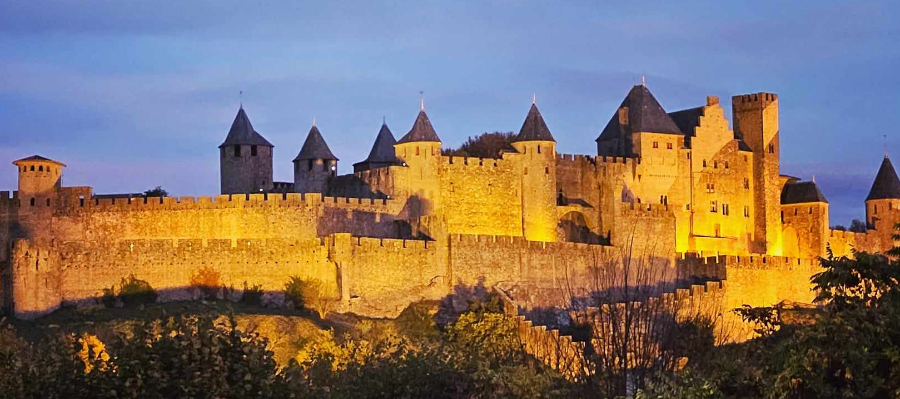
iHub ‑ ECAITWelcome to the best-preserved medieval city in Europe. Beyond the walls of Carcassonne, uncover hidden historical secrets.
The experience offered on BaladoDiscovery begins in the Lower Town and leads up to the magnificent fortified city!
EXPLORE
The interactive map of BaladoDiscovery allows you to locate the wonders of Carcassonne, as well as historical information about one of the most beautiful medieval fortresses in the world!
ON SITE
Let yourself be guided and informed at your own pace. The suggested experience starts with the Ville basse and goes back up towards the fortified city. Allow at least 4 hours if you don't want to miss anything and take the time to enjoy an unforgettable visiting experience.
OPTIMIZED EXPERIENCE
Using the mobile app BaladoDiscovery is recommended (rather than the website). All the content is accessible online (streaming) or offline (without Internet on site, smartphone in hand) with the Preload option in the app. An itinerary is suggested, and your location is displayed in real time during your walk.
Over 500 immersive experiences are available for free in the same app, with no ads.
STARTING POINT
In the lower part of the city, in front of the Tourist Office, if you take the itinerary into account.
HISTORICAL CONTEXT
The site's history is even older than the Medieval City itself. One century before Christ, there used to be a Roman city! It became part of the Trencavel over one thousand years later, in 1082.
The 13th century will considerably mark the City's physiognomy. It adorns itself with new fortifications, including the construction of the outer enclosure and the modernization of the interior rampart, making it one of the strategic strongholds facing the region of Aragon.
Roussillon was annexed to France starting in 1659, and the City of Carcassonne gradually deteriorated over the following centuries. It is abandoned in favor of the Ville Basse (or Bastide) which makes it possible to grow vineyards and to develop the cloth industry with the Canal du Midi. The City is in such a state of dilapidation that an 1850 order in council directs its partial destruction.
A lot of persuasion was needed to prevent the tragic end of the oldest part. We can thank Jean-Pierre Cros-Mayrevieille (the inspector of historic monuments behind the classification of the Saint Nazaire Basilica) and Prosper Mérimée (the general inspector of historic monuments) for their involvement in this regard. The restoration was entrusted to Eugène Viollet-le-Duc.
Have a nice excursion !
CREDITS
Producted by iHub - ECAIT
Comments
GPS Self-Guided Tour of the Medieval City of Carcassonne